

Quick Answer: Wired monitoring systems generally outperform wireless ones for critical vibration monitoring due to their reliability, continuous data, and lack of battery issues. They provide stable, high-quality measurements, free from wireless interference, unlike wireless sensors, which face limitations in battery life, data gaps, and connectivity. In Middle Eastern (particularly UAE, Saudi Arabia, Oman, Bahrain, Kuwait, Qatar) oil and gas, mining, power, and other plants, safety and uptime make wired systems more valuable than the convenience of wireless devices.
Reliability Is Paramount in Oil & Gas Monitoring
In the oil and gas industry, predictive maintenance and vibration monitoring are essential to avoid unplanned downtime and accidents. Major operations in the Middle East face harsh conditions like extreme heat and dust, as well as the challenges of managing large-scale facilities. Unplanned downtime can cost hundreds of thousands of dollars per hour, reaching millions daily due to lost production and safety risks. Thus, plant managers require reliable monitoring systems that provide continuous data to detect issues before failures.
Understanding Wireless vs Wired Systems
Wired and wireless monitoring systems both aim to track machine health (via sensors on pumps, compressors, turbines, etc.), but they differ significantly in performance and practicality.
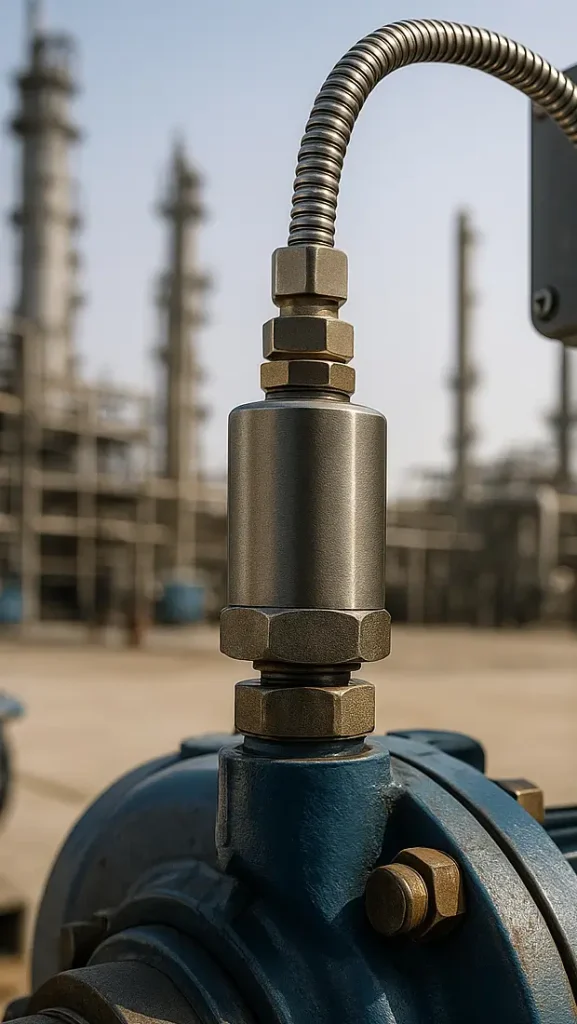
Wired monitoring systems use sensors connected by cables to transmit data continuously to a central unit or diagnostic station. These sensors (commonly accelerometers or other vibration sensors) send high-quality raw vibration signals in real time. A good example is the real-time diagnostic COMPACS® system, which uses proprietary wired sensors connected to a diagnostic station. Such systems can be installed on every piece of equipment, providing comprehensive coverage and eliminating sudden failures by detecting defects early.
Wireless monitoring systems utilize sensors that transmit data via radio frequencies, such as Wi-Fi, Bluetooth, or mesh networks, to a gateway or cloud platform. These battery-powered devices communicate periodically or when triggered, offering flexibility as part of the Industrial IoT trend. They can be attached to equipment without cables and are useful where wiring is complex, or equipment is located in a remote area. However, they must balance data frequency and battery life, sometimes sending data only periodically, such as once every few hours.
Advantages of Wired Monitoring Systems
Wired systems have been the traditional choice for high-end condition monitoring in critical industries. Here are the key advantages of wired vibration monitoring:
Unmatched Reliability and Data Quality
Wired sensors offer highly reliable, interference-free communication through direct cable transmission, ensuring stable and accurate data transfer with no loss. This is particularly vital for oil and gas plants, where missed or delayed alerts can lead to catastrophic failures. Wired systems provide real-time, high-frequency signals for early fault detection, enabling dependable condition monitoring for data-driven maintenance decisions.
Battery-Free Operation
Wired sensors don’t need batteries, eliminating the main wireless limitation: battery life. They operate continuously without the risk of unexpected power loss. Wired systems are always “on,” ensuring constant monitoring and reducing maintenance since there’s no need to replace batteries in numerous sensors.
High Accuracy and Rich Data for Analysis
Wired vibration monitoring provides a wide bandwidth for accurate analysis, transmitting large volumes of sensor data, such as waveforms and spectra, in real time. This enables advanced analysis, such as frequency spectrum and AI pattern recognition, to detect emerging faults and conduct root cause analysis. For instance, the COMPACS wired system detects emerging defects with 97-99% accuracy by leveraging continuous data and intelligent algorithms. This precision helps identify problems early, preventing downtime.
Robustness in Industrial Environments
Industrial sites are harsh, filled with metal, heavy equipment, noise, and hazards. Wired hardware is durable and can handle high temperatures, vibrations, and dust. Wired signals are less affected by radio interference and remain stable amidst obstacles like pipes and vessels, making them reliable in harsh environments such as Middle Eastern oil, gas, mining, and power plants.
Lower Long-Term Costs and Maintenance
Wired systems require an upfront investment but generally have lower maintenance costs because their components are durable, need no regular attention, battery replacements, or frequent updates. This reduces the workload, appealing to managers who are mindful of budgets. Although initial wiring costs are higher, their reliability and longevity lead to cost savings and higher ROI.
Immediate Alerts and Real-Time Response
Wired monitoring streams data instantly, enabling immediate alerts, such as triggering an alarm within seconds if a pump’s vibration increases, ensuring the fastest response. This real-time transparency makes wired systems ideal for process control and safety, where latency is unacceptable. Engineers and operators receive up-to-the-second information, allowing quick responses and enhanced safety.
Let’s Talk About The Monitoring Systems
Discover how real-time monitoring with AI-prescriptions can increase uptime and reduce maintenance costs.
Disadvantages of Wireless Monitoring Systems
Wireless IoT sensors have become popular for specific use cases, but they come with significant disadvantages, especially compared to wired options.
Major Power Issue
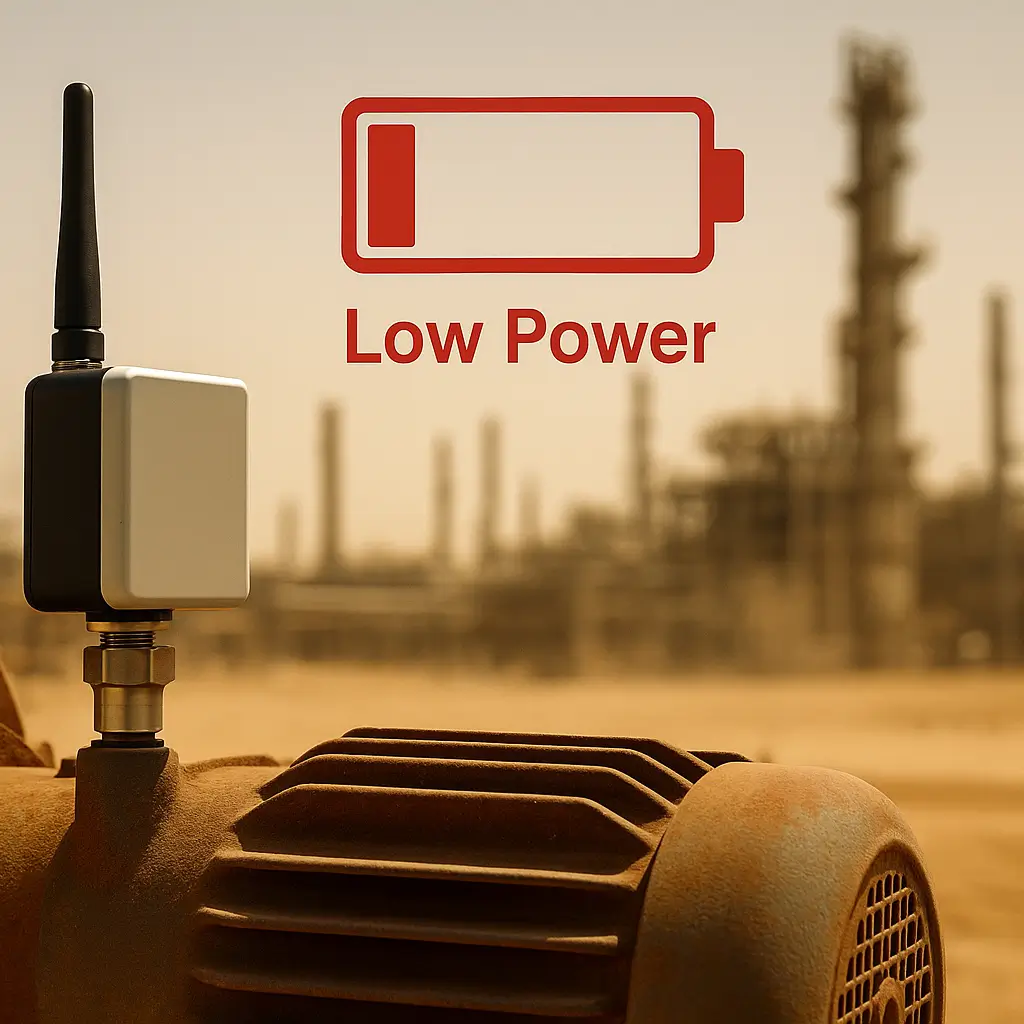
Most wireless sensors rely on batteries, which can quickly drain in high-data or harsh environments, requiring frequent replacements. This maintenance burden increases in large facilities, and unexpected battery failures on critical sensors can create monitoring blind spots.
Inaccurate or Incomplete Data
Wireless sensors face obstacles such as metal, concrete, weather, and radio sources, which can disrupt signals and cause data loss or delays. This is critical in large environments like refineries, where sensors far from gateways may lose connection. Wireless monitoring saves battery and reduces network load by transmitting summarized data periodically instead of continuous high-resolution waveforms, risking missed transient events or subtle patterns, especially for high-speed machinery in processing facilities. Unlike wired systems, which offer continuous, detailed data, wireless solutions prioritize power savings, making them suitable for trend analysis but inadequate for detailed root-cause vibration analysis and early fault detection.
Cybersecurity Risks
Wireless sensors introduce cybersecurity risks, such as eavesdropping or hacking, despite the use of modern encryption. Also, they can malfunction or need updates, adding complexity.
Higher Total Cost for Large Deployments
Wireless sensors are marketed as cost-savers because they reduce wiring work. While installation is quicker, costs for large-scale deployments are less clear. They often cost more due to radio modules, batteries, and infrastructure like gateways. Long-term costs include battery replacements and maintenance, which can offset initial savings. Over time, a wired system may be more cost-effective due to greater reliability and lower downtime, aligning with long-term investment goals.
Not Suitable for Critical Machinery Protection
Wireless monitoring isn’t used for real-time control or emergencies due to reliability and latency issues. Critical assets like compressors rely on wired sensors, as wireless is risky for vital equipment. Many oil & gas plants use wireless only for less critical machines, preferring wired systems for key machinery. Wireless is convenient, but wired systems are still more trusted. Despite improvements, wireless remains supplementary until it matches the stability of wired connections.
Explore All The COMPACS® System’s Solutions
Discover how real-time monitoring with AI-prescriptions can transform your approach to equipment maintenance.
Drawbacks of Wired Systems (and Why They’re Worth It)
For balance, it’s important to acknowledge that wired monitoring systems do have some disadvantages. However, in the context of oil and gas predictive maintenance, these are usually manageable trade-offs:
More Complex Installation
Running cables throughout a facility requires planning and effort. Installation can be time-consuming, especially in an existing plant. By contrast, wireless sensors can be mounted on machines with minimal disruption. However, this upfront investment in wiring is typically justified by the long-term gains in data quality and reliability.
Less Flexibility
Wired sensors are less flexible for relocation or reconfiguration. Wireless sensors are better suited for frequent reconfigurations because they can be easily moved. However, in oil & gas plants, reconfiguration is rare, so flexibility isn’t a significant benefit.
Potential Cable Damage
In industrial settings, cables can be cut, crushed, or damaged by corrosion. Using armored cables or protective trays reduces this risk. While a severed cable can stop data transfer, such incidents are rare. Moreover, modern systems, such as the COMPACS, have built-in self-diagnostics that immediately inform operators about damaged wires. Wireless links, however, can be broken by interference at any time without warning. Many engineers prefer physical cables that are visible and secure.
Despite these downsides, for critical monitoring tasks, industry consensus is that wired systems’ benefits greatly surpass their drawbacks. When machine failures can cause explosions, fires, or multi-million-dollar losses, most plant managers are willing to deploy the most reliable monitoring infrastructure available.
Comparison Table: Wired vs Wireless Monitoring
| Aspect | Wired Monitoring Systems | Wireless Monitoring Systems |
|---|---|---|
| Reliability | Very high reliability, stable, continuous connection. | Can suffer signal loss and interference. Reliability depends on wireless network quality and battery status. |
| Data Quality & Frequency | 24/7 high-speed data streaming. Ideal for detailed vibration analysis and early fault detection. | Often lower sampling rates or periodic data to save power. May send summarized or infrequent readings. |
| Power Supply | No batteries needed. | Battery-powered, requires battery replacement or recharging. |
| Maintenance | Low ongoing maintenance. Little intervention needed. Lower long-term cost due to durability. | Requires regular manual checks on batteries and network health. Firmware updates and troubleshooting wireless issues add to maintenance tasks. |
| Installation | More complex initial installation. Higher upfront cost and effort. | Simple, quick installation. Ideal for hard-to-reach or remote locations. Lower initial deployment cost. |
| Flexibility | Less flexible for temporary setups. | Highly flexible, sensors can be relocated easily. |
| Interference & Environment | Not prone to radio interference. Can be engineered for harsh environment and hazardous areas (explosion-proof). | Signals can be affected by steel structures and wireless noise. Range limitations in large facilities. Battery performance drops in extreme heat. |
| Security | Data stays on wired circuits. | Wireless signals could be intercepted or spoofed. Higher risk of hacking for cloud solutions. |
| Best Use Cases | 24/7 monitoring of all equipment (e.g. pumps, compressors, turbines, etc.) | Supplementary or temporary monitoring, or for moving equipment or remote wellheads. Useful for quick deployments and non-critical asset monitoring, where some data delay/loss is acceptable. |
What Solution Meets Your Goals
Let’s discuss monitoring systems and how they can maintain sustainable operations at your plant by eliminating equipment failures
Why Wired Monitoring Prevails in the Middle East Oil & Gas Sector
In the Gulf countries (Saudi Arabia, UAE, Oman, Qatar, Bahrain, Kuwait), oil & gas companies are rapidly adopting digital solutions to improve reliability and safety. Wired equipment monitoring systems align well with the priorities of this region’s industry leaders. Here’s why:
Focus on Maximizing Uptime
Gulf plants are among the largest globally, and any downtime impacts markets and revenue. Reliability is crucial. Wired systems detect issues and prevent failures, supporting this goal. They have prevented fires and shutdowns, appealing to executives for safer and more sustainable operations. Wireless gadgets risk missing warnings or failures.
Investment in Long-Term Infrastructure
Large oil companies like Saudi Aramco and ADNOC view wired monitoring as a valuable, long-term investment, with wireless solutions used mainly in niche cases. Enterprise-wide deployment favors wired networks for stability, prioritizing proven technology for core operations and wireless only where wiring is impossible.
Management Peace of Mind
Top oil & gas executives and asset managers in the Middle East seek peace of mind, trusting comprehensive predictive maintenance systems that continuously monitor critical equipment with advanced diagnostics, such as physics-based AI, in the COMPACS system. Wired systems offer clear, reliable data, reducing emergency calls and enabling confident decision-making.
Conclusion
Both wired and wireless systems are used in industrial vibration monitoring. Wireless sensors offer flexibility and quick setup, making them ideal for non-critical or short-term applications. However, for critical machinery in the oil and gas, mining, and other industries, wired systems are superior, offering reliable, real-time, accurate data to prevent overlooked warnings.
An advanced maintenance strategy incorporates the strengths of both approaches, for instance, using wired systems on the major equipment and wireless sensors in locations where wiring is prohibitively expensive. Such a hybrid approach can be effective, but the core critical assets still benefit most from wired reliability.
Ready to Increase Uptime by 6-8 Times?
Book an Online Strategy Session Now
Explore Our Case Studies

Reciprocating Compressor Monitoring Case Study
06/12/2025
Introduction: Compressor Monitoring Reciprocating compressors are widely used in critical processes at oil refineries, such as diesel hydrotreating and dewaxing...
Read More
Case Study: Preventing Cavitation Damage
03/07/2025
The Hidden Threat: Cavitation in Petrochemical Plants Every petrochemical plant faces the invisible threat of cavitation, a destructive force capable...
Read More
Coke Drum Monitoring Case Study: Preventing Fire and Explosion
05/02/2025
Introduction: Delayed Coker Units Under Pressure Delayed coker units are the heart of heavy oil upgrading operations in refineries across...
Read More