A List Of Defects And Malfunctions
Which The Real-Time Diagnostic COMPACS® System Identifies In Static Equipment
Book a MeetingStatic Equipment Monitoring
The COMPACS® system utilizes several NDT methods such as acoustic-emission, thermal, electrical, eddy-current, and mathematical methods, such as correlation analysis. The faults are primarily detected by the acoustic emission method. Besides that, the physics-based AI calculates and utilizes deformation parameters, temperature, its gradients, and temperature growth rates of temperature fields. Also, the system detects leaks and contamination of the static equipment for oil and gas, petrochemical, mining, and other plats.
CRACKING PROCESSES

passive AE source

active AE source

critically active AE source

catastrophically active source of AE

catastrophic rise in pulse energy

catastrophic rise in pulse number
PROCESS MODE VIOLATIONS

unacceptable linear body strain

unacceptable rate of linear body strain

unacceptable local deformation

unacceptable rate of local deformation

overheating
unacceptable temperature drop
ACCOMPANYING DEFECTS

leak

corrosion, erosion

tube bundle contamination
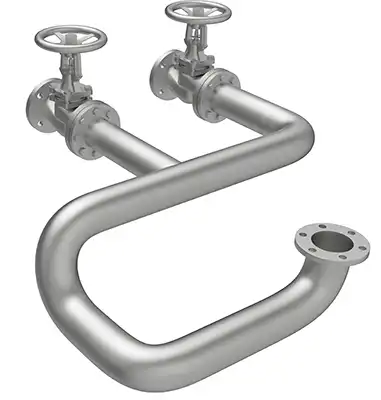
A Pipeline
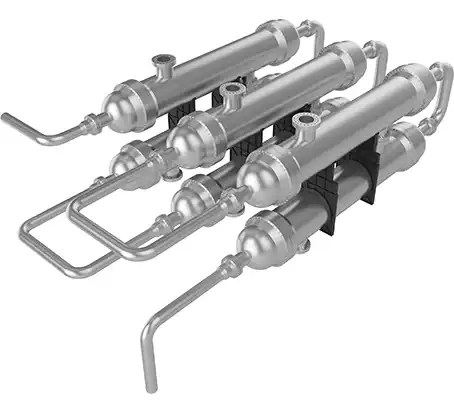
A Heat Exchanger

A Tank

A Vessel
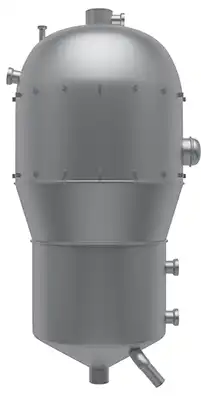
A Regenerator

A Coke Drum

A Tower
Not Only Defects But A Degradation Stage As Well
Physics-based artificial intelligence utilizes scientifically proven knowledge. Thus, each defect or malfunction of static equipment in oil refineries and other plants has its own unique set of parameters that not only reliably detect the malfunction itself but also allow for determining the stage of its degradation using specific thresholds. Thus, if the system identifies a particular pattern, the defect exists, and its stage of degradation has been determined. The COMPACS® system monitors the state of coke drums, regenerators, towers, tanks, vessels, pipelines, heat exchangers, and other static equipment.
 Physics Based AI
The real-time diagnostic COMPACS® system identifies almost all defects in rotating and fixed equipment at their emergence with an accuracy of 97 – 99%
Physics Based AI
The real-time diagnostic COMPACS® system identifies almost all defects in rotating and fixed equipment at their emergence with an accuracy of 97 – 99%
 Crucial Components Of The COMPACS® System
The real-time diagnostic COMPACS® system comprises own cutting-edge hardware, physics-based artificial intelligence, and user-friendly software
Crucial Components Of The COMPACS® System
The real-time diagnostic COMPACS® system comprises own cutting-edge hardware, physics-based artificial intelligence, and user-friendly software
 True Safety And Reliability
Affordable price, tailor-made engineering, and turn-key installation allow to equip with the system each and every piece of rotating equipment and all critical static equipment at the facility
True Safety And Reliability
Affordable price, tailor-made engineering, and turn-key installation allow to equip with the system each and every piece of rotating equipment and all critical static equipment at the facility
 No More Sudden Failures
Armed with unbiased, accurate and timely information operators and maintenance team
jointly eliminates sudden equipment failures, and provide safe resource-saving operation and maintenance of machinery
No More Sudden Failures
Armed with unbiased, accurate and timely information operators and maintenance team
jointly eliminates sudden equipment failures, and provide safe resource-saving operation and maintenance of machinery
 Three Steps To The Paramount Reliability
Substantial contribution to reliability from operators and high quality, timeliness, and responsiveness of the maintenance team allows to eliminate root-causes of equipment failures and bottlenecks that limit the facility’s operation.
Three Steps To The Paramount Reliability
Substantial contribution to reliability from operators and high quality, timeliness, and responsiveness of the maintenance team allows to eliminate root-causes of equipment failures and bottlenecks that limit the facility’s operation.