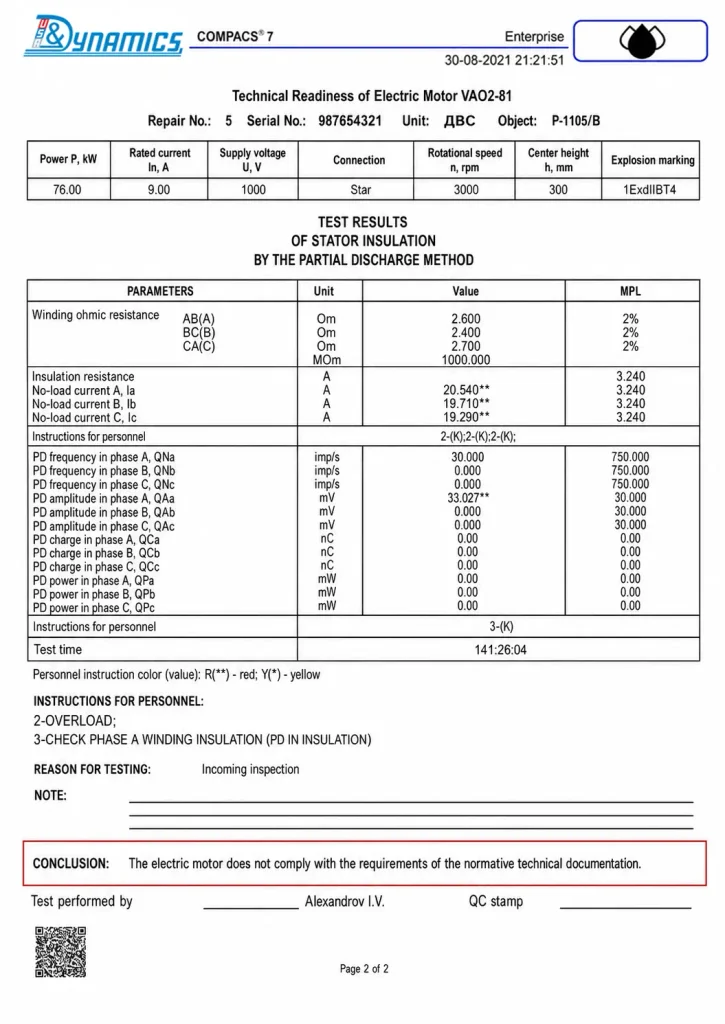
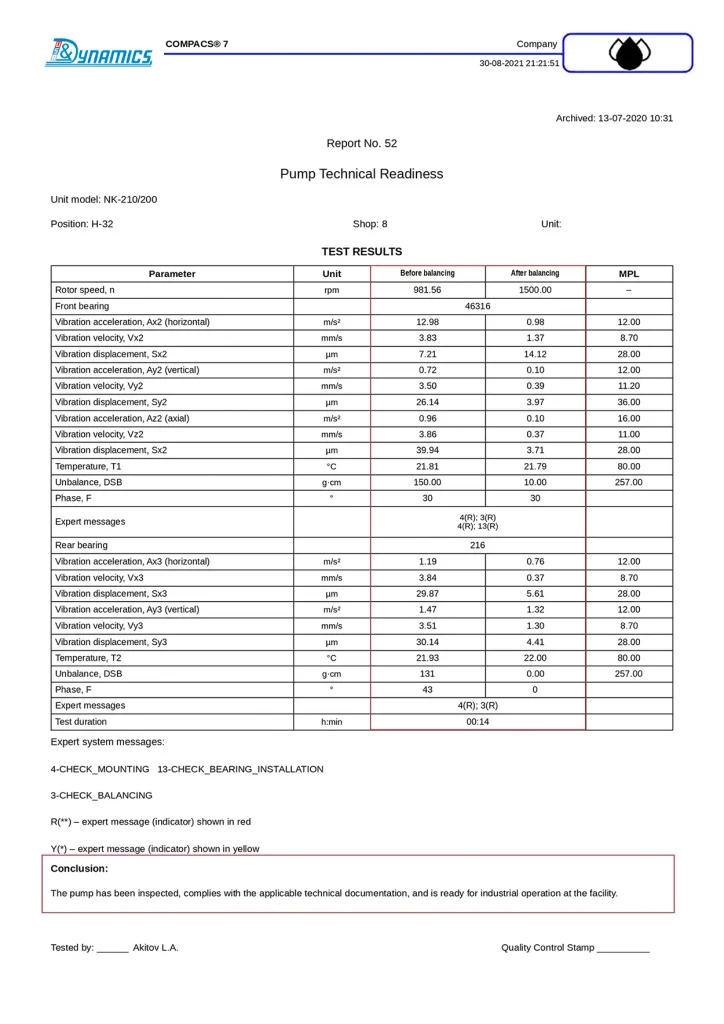
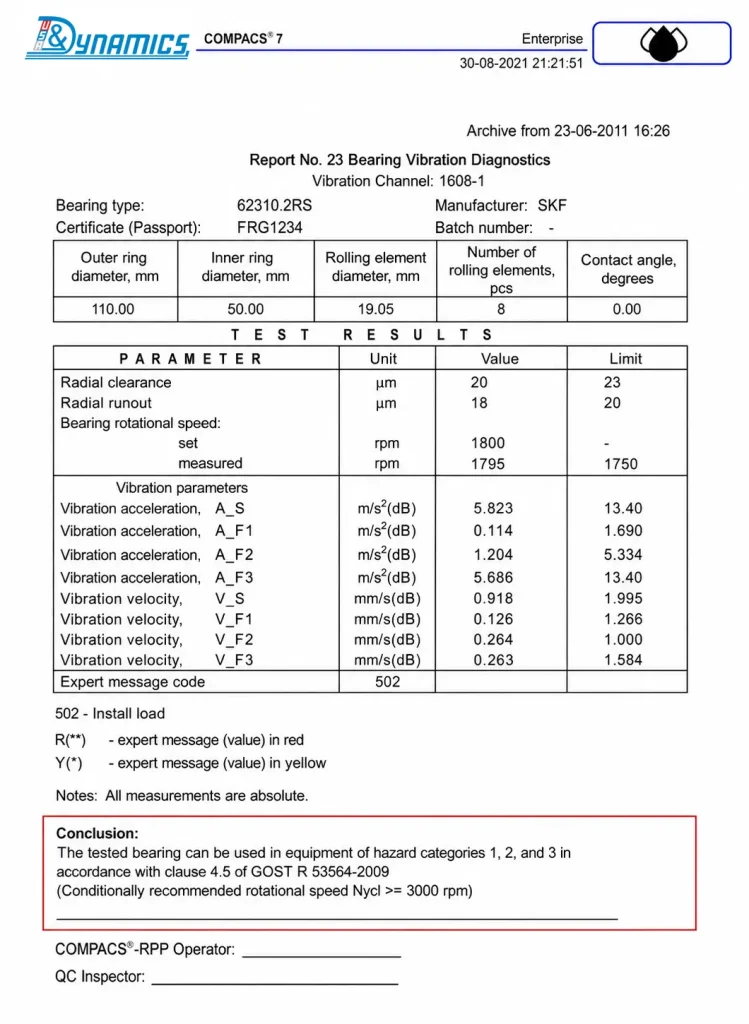
Nowadays, the efficiency in hydrocarbon processing is achieved mainly due to extended facility uptime, reduced downtime and maintenance costs. The criticality of the equipment determines the tools for its monitoring. However, very often, the criticality depends on many variables that make the process of criticality assessment very complex
Factors Determining The Criticality Of Equipment
Importance of the operating position
The hazard of the feedstock
Equipment’s failure influence on the state of following pieces of equipment
The probability of failure in operation
The Importance Of Safety
The degree of redundancy should not affect the equipment category, since a sudden breakdown of the main machine, regardless of the number of standby machines, can lead to an accident, downtime, or significant decrease of processing capacity. In addition, the standby machine is not always in a good technical state. The standby machine can be under maintenance or absent at the position. This is a reason we developed our criticality matrix, which is based on risk in operation
Probability Of A Failure In Operation
Most Probable Consequences In Case Of Sudden Failure
High
The Most Likely Consequences In The Event Of A Sudden Failure With A High Probability Of Failure In Operation
1st
Category
Risks:
- Accident
- Downtime (capacity declining)
- Repair/replacement of machinery
2nd
Category
Risks:
- Downtime (capacity declining)
- Repair/replacement of machinery
Low
The Most Likely Consequences In The Event Of A Sudden Failure With A Low Probability Of Failure In Operation
3rd
Category
Risks:
- Repair/replacement of machinery
4th
Category
Risks:
- Negligible
According to the risk matrix, at least the equipment in the 1st and 2nd categories should be monitored with the real-time diagnostic COMPACS® system because it allows for the elimination of sudden equipment failures. Thus, we provide a turn-key implementation of the system at the facility. Nevertheless, we don’t fulfill the installation itself because a few companies might install the system at a particular facility. Our scope of work comprises an engineering study of the equipment at the facility, developing a design project for the system’s installation, manufacturing the system and delivering it to the customer’s site, supervising the contractor’s installation of the field bus, commissioning the system, and staff training. In total, this stage takes approximately 6 months to complete
System Implementation On A Turnkey Basis

Design

Manufacture

Supply
Commissioning

Training
Service
If a customer chooses to begin with a Pilot project, we will support the customer’s activities towards improving machinery health, reliability, and uptime of the Unit within the following 6 months
If the outcomes of the Pilot project are approved, we will offer to sign a 3, 5, or 10-year system-as-a-service (SaaS) agreement and equip the entire facility with the system
Besides that, if we get the SaaS agreement, we will open our service center directly at the facility or nearby. It allows a customer to get our world-class digital reliability and safety service directly
 Physics Based AI
The real-time diagnostic COMPACS® system identifies almost all defects in rotating and fixed equipment at their emergence with an accuracy of 97 – 99%
Physics Based AI
The real-time diagnostic COMPACS® system identifies almost all defects in rotating and fixed equipment at their emergence with an accuracy of 97 – 99%
 Crucial Components Of The COMPACS® System
The real-time diagnostic COMPACS® system comprises own cutting-edge hardware, physics-based artificial intelligence, and user-friendly software
Crucial Components Of The COMPACS® System
The real-time diagnostic COMPACS® system comprises own cutting-edge hardware, physics-based artificial intelligence, and user-friendly software
 True Safety And Reliability
Affordable price, tailor-made engineering, and turn-key installation allow to equip with the system each and every piece of rotating equipment and all critical static equipment at the facility
True Safety And Reliability
Affordable price, tailor-made engineering, and turn-key installation allow to equip with the system each and every piece of rotating equipment and all critical static equipment at the facility
 No More Sudden Failures
Armed with unbiased, accurate and timely information operators and maintenance team
jointly eliminates sudden equipment failures, and provide safe resource-saving operation and maintenance of machinery
No More Sudden Failures
Armed with unbiased, accurate and timely information operators and maintenance team
jointly eliminates sudden equipment failures, and provide safe resource-saving operation and maintenance of machinery
 Three Steps To The Paramount Reliability
Substantial contribution to reliability from operators and high quality, timeliness, and responsiveness of the maintenance team allows to eliminate root-causes of equipment failures and bottlenecks that limit the facility’s operation.
Three Steps To The Paramount Reliability
Substantial contribution to reliability from operators and high quality, timeliness, and responsiveness of the maintenance team allows to eliminate root-causes of equipment failures and bottlenecks that limit the facility’s operation.